


Around 50 guests from academia, industry, education and the public gathered at the OST campus in Rapperswil on 26 June 2026 to celebrate World Refrigeration Day and explore how sustainable cooling technologies contribute to climate action, resilient healthcare and the energy transition. The event highlighted the impact of the European research project SophiA Project, which demonstrates how applied research and international collaboration can deliver tangible benefits for communities in both Switzerland and the Global South.
Observed annually on 26 June, World Refrigeration Day commemorates the birthday of Lord Kelvin (1824–1907) and raises awareness of the essential role that refrigeration, air conditioning and heat pump technologies play in everyday life. Sustainable cooling is indispensable for healthcare, food security, industrial processes and climate adaptation, making it one of the key enabling technologies for achieving the Sustainable Development Goals.
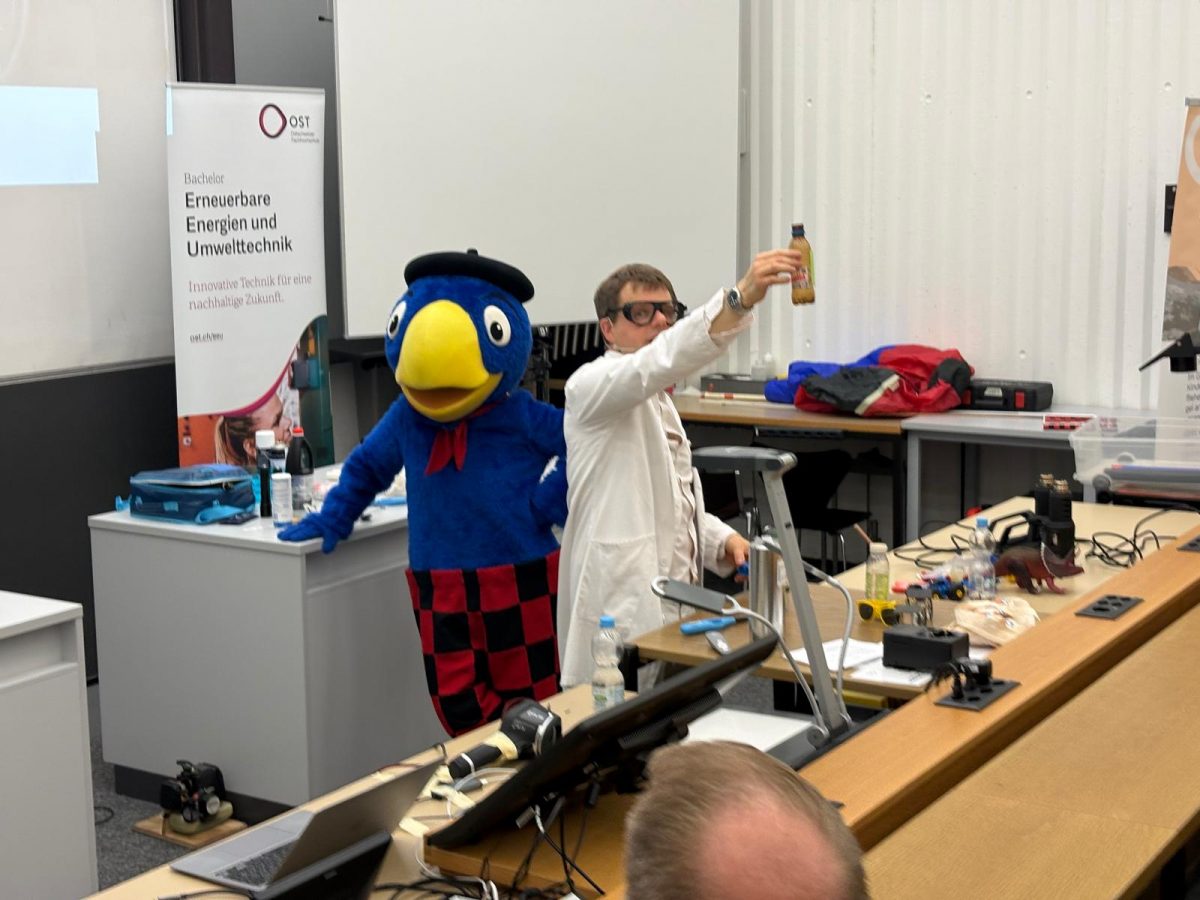
Researchers, industry representatives, students, families and guests from Switzerland and abroad came together for an afternoon of inspiring presentations, interactive demonstrations and networking. One of the highlights was the Globi Energy Show, where participants from the Rapperswil-Jona secondary school, together with families and other visitors, discovered the fascinating world of energy through engaging experiments and live demonstrations. The programme also featured the Cool Energy Competition award ceremony, hands-on workshops on making ice cream and ice slush using sustainable cooling technologies, demonstrations of solar-powered cooling solutions, presentations on current refrigeration research, and an interactive children’s concert by the band UNIKAT from Offenburg. The day concluded with an international summer buffet, providing an excellent opportunity for networking and exchange.
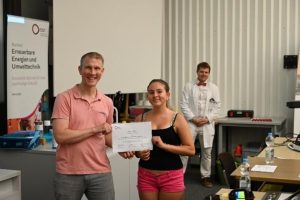
Celebrating the next generation of innovators: Ariane received the first prize in the Cool Energy Competition from OST in recognition of her creative project on solar cooling
Among the young participants, Ariane received the first prize in the Cool Energy Competition for her innovative project on solar cooling. As part of her project, she demonstrated how sustainable cooling technologies can be used to prepare a delicious orange ice slushy, combining scientific principles with a practical and refreshing application that delighted visitors.
Reflecting on her experience at the event, Ariane said:
“I really liked how the teachers explained why global warming is harmful and how we can protect our planet. My favourite part was the experiment with powdered sugar and fire, and of course making ice cream. It was exciting to learn science in such a fun and interactive way.”
Ariane’s creativity, curiosity and enthusiasm perfectly reflect one of the main objectives of the World Refrigeration Day at OST: inspiring young people to explore engineering, renewable energy and sustainable cooling technologies while encouraging the next generation to develop innovative solutions for global challenges.
A central theme throughout the event was the transition towards natural refrigerants and sustainable refrigeration technologies. Isabell Walter from RIVACOLD CI GmbH emphasized that the shift towards natural refrigerants is not simply a response to legislation, but a conscious commitment to the future of refrigeration. She stressed the importance of supporting operators, planners and installers through transparent information, practical guidance and early preparation for the gradual phase-out of fluorinated refrigerants.
The global perspective was reinforced by Yosr Allouche, Director General of the International Institute of Refrigeration and the first woman to lead the organisation in its more than 100-year history. She highlighted that refrigeration is far more than a technology—it is a vital service that preserves food, safeguards medicines and vaccines, supports healthcare systems and helps communities adapt to climate change. As global cooling demand continues to grow, ensuring equitable access to sustainable refrigeration solutions, particularly for vulnerable communities, remains a shared international responsibility.
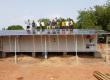
Yosr Allouche also recognised the SophiA Project as an inspiring example of how international collaboration can transform research into tangible societal impact. By combining solar energy, natural refrigerants and locally manufactured technologies, SophiA provides reliable off-grid cooling, clean water and sustainable energy services for rural healthcare facilities across Africa. Through communication, dissemination, training and knowledge sharing, the IIR helps maximise the visibility and long-term impact of the project’s results.
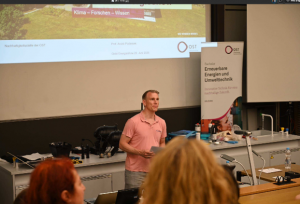
André Podleisek, OST’s Head of Sustainability, showed how projects like SophiA advance OST’s Sustainability
For OST, SophiA is more than a research project—it is an important element of the university’s sustainability strategy. André Podleisek, Head of Sustainability at OST, explains: “SophiA is a cornerstone of our activities in Climate Adaptation Partnerships with the Global South, one of the key action areas of the OST Sustainability Strategy. The project demonstrates how applied research, international collaboration and knowledge transfer can deliver practical solutions to climate challenges while improving healthcare and quality of life.”
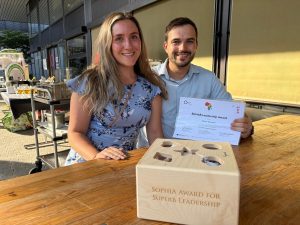
During the event, Oliver Schmid, Technical Coordinator of the SophiA Project at the Karlsruhe University of Applied Sciences, was presented with an OST Sustainability Certificate of Appreciation in recognition of his outstanding contribution to the SophiA project. The award acknowledged his long-standing commitment to developing sustainable energy solutions for healthcare facilities in the Global South, his leadership in the technical implementation of the SophiA systems, and his dedication to fostering the successful collaboration between OST, HKA and the international consortium.
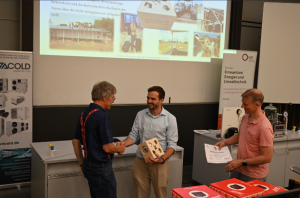
Oliver Schmid (centre), Technical Coordinator of the SophiA Project at the Karlsruhe University of Applied Sciences (HKA), receives the OST Sustainability Certificate of Appreciation from André Podleisek (right), Head of Sustainability at OST, in recognition of his outstanding contribution to SophiA, together with Prof. Dr. Michael Kauffeld (left), Coordinator of the SophiA project.
Prof. Stefan Bertsch, Head of the Institute for Energy Systems (IES) at OST, highlighted the importance of refrigeration and heat pump technologies: “The importance of heat pumping and refrigeration can hardly be overrated. The seemingly simple capability of moving heat from colder to warmer temperatures is vital—from cold chains to energy-efficient industrial process heating. At the Institute for Energy Systems, we investigate these technologies from the overall system level down to components and refrigerants, both theoretically and experimentally.”
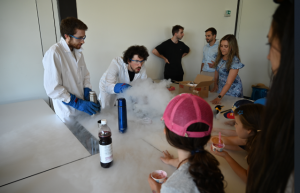
Hands-on science for all ages: Visitors explored the principles of sustainable cooling through interactive experiments, led by OST researchers during the World Refrigeration Day 2026.
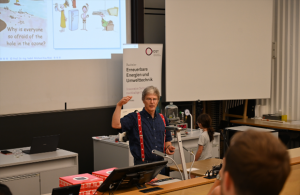
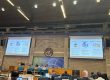
Prof. Dr. Michael Kauffeld (SophiA Coordinator, HKA) delivers a keynote on sustainable cooling and natural refrigerants at OST’s World Refrigeration Day 2026.
Prof. Dr. Michael Kauffeld, Coordinator of the SophiA project at the Karlsruhe University of Applied Sciences, underlined the broader significance of sustainable cooling: “Sustainable cooling is far more than a technical solution—it is fundamental to resilient healthcare, food security and climate adaptation. Through SophiA, we demonstrate how innovative technologies, international cooperation and local capacity building can create lasting impact where it is needed most.”
The celebration of World Refrigeration Day at OST demonstrated how research, education, industry and international organizations can work together to accelerate the transition towards sustainable cooling. Through projects such as SophiA, OST contributes not only to scientific excellence but also to practical solutions that strengthen resilience, improve healthcare and support climate adaptation across the globe.
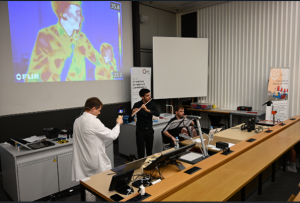
The Globi Energy Show captivated young and old alike, using interactive experiments, thermal imaging and hands-on demonstrations to explain the science behind energy, heat transfer and sustainable energy in an engaging and entertaining way.
The event was made possible through the generous support of numerous partners. OST would like to thank RIVACOLD CI GmbH, Refolution Industriekälte GmbH, SSP KÄLTEPLANER AG, Steinbeis Transfer Centre for Refrigeration and Air Conditioning Technology (ST2K), Wenger Finance, and the Energieagentur St. Gallen for their valuable support and commitment to advancing sustainable refrigeration technologies.
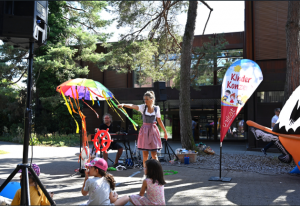
Fun, music and sustainability: Families enjoyed the interactive children’s concert, where music, games and creative activities inspired young visitors to discover the fascinating world of energy, climate and sustainable cooling
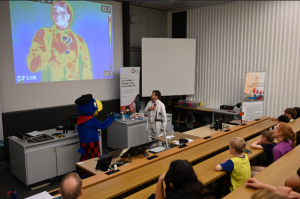
The Globi Energy Show captivated young and old alike, using interactive experiments, thermal imaging and hands-on demonstrations to explain the science behind energy, heat transfer and sustainable energy in an engaging and entertaining way